Corsair Cove Zipline and Vertical Logistics Guide
Unlock costs, downhill gravity rules, warehouse hubs, and when All Hands on Deck makes routes worse.
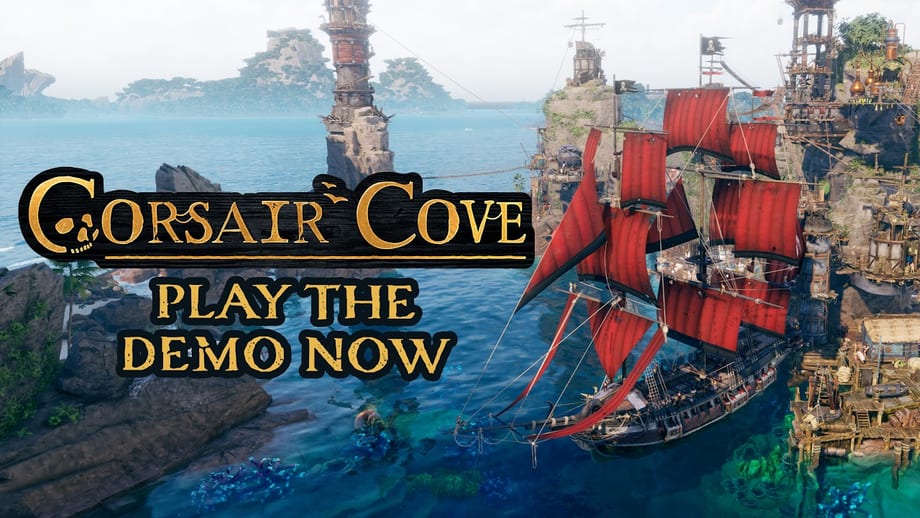
Corsair Cove’s cliffs are not scenery — they are a tax on every plank and stew bowl your fetchers carry. Once flat paths turn red on the efficiency overlay, vertical transport stops being optional. Ziplines are the first unlock most retail openings chase on the Notoriety branch, but they are not free: you spend compass coins, respect one-way gravity, and pair them with masts, elevators, or walk-back paths so round trips do not silently halve throughput. This guide covers unlock costs, warehouse hub design, green/yellow/red route reading, and when All Hands on Deck helps versus hurts vertical logistics.
Read vertical building for placement habits, supply chains for fetcher basics, and Notoriety compass build if you are planning deed order before your first cliff expansion.
Zip Line unlock — Notoriety and Seafaring costs
Retail progression typically unlocks Zip Line infrastructure through the Technology Compass after earning deed points and spending coins on nodes:
| Unlock | Typical branch | Approximate coin cost |
|---|---|---|
| Zip Line | Notoriety | ~10 coins |
| Mast (zipline anchor support) | Seafaring | ~20 coins |
| Elevator | Empire | mid-tree Empire spend |
| Aerial Lift | late multi-branch | expensive — endgame logistics |
Exact coin totals shift with prerequisite nodes you already purchased; treat the table as planning order, not a spreadsheet guarantee. Most Skull Rock openings aim for Zip Line plus Mast before sprawling to distant hardwood or stone deposits.
Aerial Lift solves extreme elevation gaps but costs enough that early camps should not wait for it — use ziplines and Empire elevators first. See compass Empire build for multi-camp vertical spines.
Gravity downhill — one-way efficiency
Ziplines move goods downhill quickly, often one-way. A sawmill on a high shelf feeding a warehouse below via zipline is excellent. Expecting the same zipline to return empty barrels uphill is not — fetchers walk back unless you build symmetric logistics.
Practical rule: design downhill production → warehouse → uphill camp loops with either:
- A second path (ramp, elevator, reverse zipline pair) for returns
- Consumable chains that mostly flow one direction (logs down, planks distributed locally)
Community launch-week shorthand: treat a lone zipline as ~50% round-trip efficiency unless paired. The route efficiency checklist forces you to trace return legs explicitly.
Warehouse hubs on vertical maps
Flat-builder instinct puts one mega-warehouse at the island center. Vertical maps want hub districts per elevation band:
- Upper hub — hardwood, stone, raw ore near deposits
- Mid hub — sawmill outputs, plank buffers, repair stock for bombardments
- Camp hub — stew inputs, grog overflow, pier haulers
Connect hubs with ziplines on green routes for staples; tolerate yellow only on low-priority overflow. Red on stew, planks, or rum feeding galleys means fix placement before unlocking tier-two ships.
Warehouse slots matter: dedicate one slot to repair planks before Amara timers, one to stew-critical ingredients, and avoid mixing moonshine overflow with campfire cassava unless distances stay short.
Reading green, yellow, and red routes
Corsair Cove color-codes hauler paths so inefficiency is visible:
| Color | Meaning | Action |
|---|---|---|
| Green | Short, efficient travel | Maintain for food and planks |
| Yellow | Acceptable for low priority | Upgrade before population spikes |
| Red | Bottleneck — fetchers waste time | Add zipline, elevator, or relocate warehouse |
Audit from production source → warehouse → galley, not tavern → warehouse. New players reverse the trace and wonder why stew “looks connected” while routes stay red.
Cross-check production ratios reference for early-game staffing numbers that keep yellow routes from degrading during All Hands bursts.
Elevators and Empire vertical spines
Elevators unlock on the Empire branch and suit multi-camp republics where a single zipline pair cannot serve three cliff tiers. Plan one vertical spine per camp cluster — elevator landing, warehouse, branch ziplines — instead of twelve isolated lifts missing fetchers.
Empire progression also gates second pirate camps; duplicate galley service at each hub before running ziplines between camps. Pirate camps guide covers founding order.
When NOT to use All Hands on Deck
All Hands on Deck boosts production buildings inside camp range. It is powerful and dangerous on vertical layouts:
Do not activate All Hands when:
- The boosted building lacks green input routes — you amplify starvation
- Stew or plank chains are already red — you steal drifters from haulers
- You boosted moonshine stills while campfire stew stays unboosted and understaffed
- Every drifter is already assigned — the ability empties galley staffing
- You have not toggled off a previous boost — overlapping bursts drain pools
Do activate All Hands when:
- Input warehouses sit on green routes and outputs need a temporary catch-up
- You are finishing pier or ship batch before a known story timer
- Boost targets match your bottleneck — usually sawmills or campfires, not taverns alone
All Hands increases output and input demand roughly +50% each way during the burst. If upstream routes cannot feed +50%, the boost makes route colors worse, not better.
Zipline timing in opening routes
Recommended unlock sequence for opening Skull Rock route:
- Stabilize stew and planks without ziplines
- Earn first Notoriety deed points
- Purchase Zip Line before second cliff industry cluster
- Add Mast when spanning longer downhill runs to pier haulers
- Defer Aerial Lift until tier-two ship materials flow reliably
Rushing ziplines before deeds and journal income stalls other compass nodes you need for ships.
Related guides
- Vertical building — bridges, rotation, camp radius on cliffs
- Supply chains — fetchers, warehouses, camp connectivity
- Compass Notoriety build — deed order for ziplines and taverns
- Route efficiency checklist — interactive pass/fail gates
Ziplines turn Corsair Cove’s cliffs from punishment into leverage — if you respect gravity, hub warehouses, and the moment All Hands makes routes bleed red.
Frequently Asked Questions
Quick answers to the most common questions.
How much do ziplines cost on the Technology Compass?
Zip Line typically costs around 10 Notoriety coins; Mast support often requires roughly 20 Seafaring coins. Empire elevators and late Aerial Lifts cost significantly more.
Do ziplines work uphill?
Generally no — ziplines move goods downhill one-way. Plan walk-back paths, elevators, or paired routes for return logistics.
What does a red route mean?
Red indicates hauler travel time is bottlenecking the chain. Fix with ziplines, warehouse relocation, or bridges before scaling population.
When should I avoid All Hands on Deck?
Skip it when input routes are red, stew production is understaffed, or you already boosted other buildings — it drains drifters from critical galley chains.
Where should warehouses go on vertical maps?
Cluster per elevation band near production outputs — upper raw hubs, mid plank hubs, camp consumption hubs — linked by intentional zipline spines.